Large Building & Townhouse Complex Cleaning: Planning Safe, Efficient Strata Projects
Large strata properties need more than a pressure washer and a few hours on site. When a cleaning project involves dozens of townhouses, multiple apartment levels, shared driveways, roof access and daily resident movement, careful planning protects people, property and the quality of the finished result.
How do you clean a large complex without creating unnecessary disruption? What should a documented works plan include? When might a small works contract be appropriate? And how can a strata committee or property manager confirm that the contractor is properly licensed, insured and equipped for the work?
At Emerald Exterior Services, we plan and deliver multi-day exterior cleaning projects across the Central Coast, Lake Macquarie and Newcastle areas. Our work includes townhouse complex cleaning, apartment building cleaning, roof cleaning, soft washing, exterior window cleaning, driveway and car park cleaning, and common-area maintenance.
Why large strata cleaning projects require a plan
A large complex is a live environment. Residents still need to walk to their homes, enter garages, move vehicles, collect mail and use shared paths while the project is underway.
Unlike a small residential clean, a multi-day project may involve:
- Multiple buildings, levels and access points
- Roofs, gutters, walls, windows and hard surfaces
- Boom lifts, ladders, hoses and other access equipment
- Private balconies alongside common property
- Resident, visitor and vehicle movements
- Gardens, landscaping, drains and sensitive surfaces
- Changing weather and site conditions
A clear plan allows the contractor, strata manager, committee and residents to understand what will happen, where it will happen and when each area will be affected. So, the project can progress efficiently while keeping disruption controlled and expectations clear.
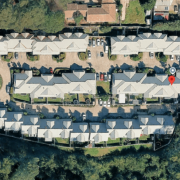
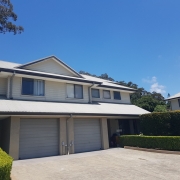
Google aerial site image showing the scale of the Prings Road townhouse complex in Narara.
1. Begin with a detailed site assessment
Before preparing a proposal, Emerald assesses the property and the practical conditions that will affect the work.
This includes reviewing:
- The number and layout of buildings or townhouse rows
- Roof types, wall finishes, windows, balconies and hard surfaces
- Height, slope and available access for equipment
- Potential boom lift or ladder positions
- Water supply and hose routes
- Runoff and wastewater considerations
- Gardens, landscaping, vehicles and nearby structures
- Pedestrian routes, driveways and resident access
- Suitable staging areas and daily work zones
This assessment helps determine whether a surface requires soft washing or pressure cleaning. Soft washing uses low-pressure water and suitable cleaning solutions to remove organic growth, mould, grime and environmental build-up from surfaces that may be damaged by excessive pressure. Pressure cleaning may be more suitable for robust concrete driveways, car parks and paths.
Our approach is not one-size-fits-all. We select the method and equipment to suit the surface, access conditions and overall project requirements. You can learn more about the process in our guide to soft washing.
2. Prepare a documented works plan
For a multi-day project, the works plan becomes the practical guide for everyone involved.
A suitable plan may outline:
- The areas included in the scope
- The order in which buildings or zones will be cleaned
- Expected work dates and daily work areas
- Access equipment required
- Resident and vehicle movement controls
- Signage, barriers and clear zones
- Communication arrangements and daily updates
- Surface protection and environmental controls
- Inspection and handover procedures
The plan can then be distributed to the strata manager, committee and residents before work begins. Residents have an opportunity to plan around the project, move vehicles where required and understand temporary access restrictions.
This preparation is particularly important for properties with shared driveways, underground car parks, narrow paths, balconies or high pedestrian traffic. It also helps the cleaning team avoid unnecessary equipment movement and repeat set-up, improving efficiency across the project.
3. Use a small works contract where applicable
A small works contract helps turn a general quotation into a clear agreement between the client and contractor. It can define:
- The exact cleaning scope and areas included
- The cleaning methods to be used
- The project programme and working hours
- Access requirements and responsibilities
- Site safety and resident protection measures
- Environmental and runoff controls
- Equipment and staging arrangements
- Reporting, photos and completion inspections
- The process for variations or additional work
In NSW, licensing and contract obligations depend on the nature and value of the work. Building-related minor maintenance and cleaning work above the relevant threshold may require a licensed contractor and a written contract. Work between $5,000 and $20,000 may fall within the small works contract range, while higher-value work may require a more extensive contract.
These requirements can depend on the particular scope, property and contract structure. They should not be treated as a blanket rule for every cleaning service. Clients should obtain legal advice for specific contractual questions and can also refer to NSW Government guidance on minor maintenance and cleaning work.
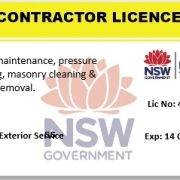
Emerald holds NSW Contractor Licence #486145C, and the owner holds the Qualified Supervisor Certificate required for the company licence. We can help clients define the scope and documentation required for a compliant, well-organised project.
4. Stage the work around residents and site activity
Once work begins, the property needs to remain safe and functional.
Emerald may use:
- Ground spotters
- Walkie-talkie communication
- Clear-zone signage
- Temporary barriers and caution tape
- Redirected pedestrian routes
- Vehicle movement controls
- Staged access to individual buildings
- Daily communication with the site contact
At Prings Road, the ground spotter directed foot and vehicle traffic, communicated with the operators in the boom lift by walkie-talkie, and moved clear-zone signage as the work area changed.
This type of active coordination is especially important when high-level cleaning takes place above driveways, garages, footpaths or resident entries. The aim is not simply to place a sign at the start of the day. It is to monitor the work area continuously and adjust controls as conditions change.
5. Choose equipment that improves safety and efficiency
Large projects often require specialised access equipment. At Prings Road, Emerald used a 60-foot knuckle boom lift to complete roof soft washing and gutter cleaning across approximately 50 townhouses over six days.
Using the right equipment can:
- Improve access to high and difficult areas
- Reduce unnecessary ladder movement
- Allow operators to work more efficiently
- Limit repeated equipment set-up
- Support consistent cleaning across multiple buildings
- Keep workers positioned safely for the task
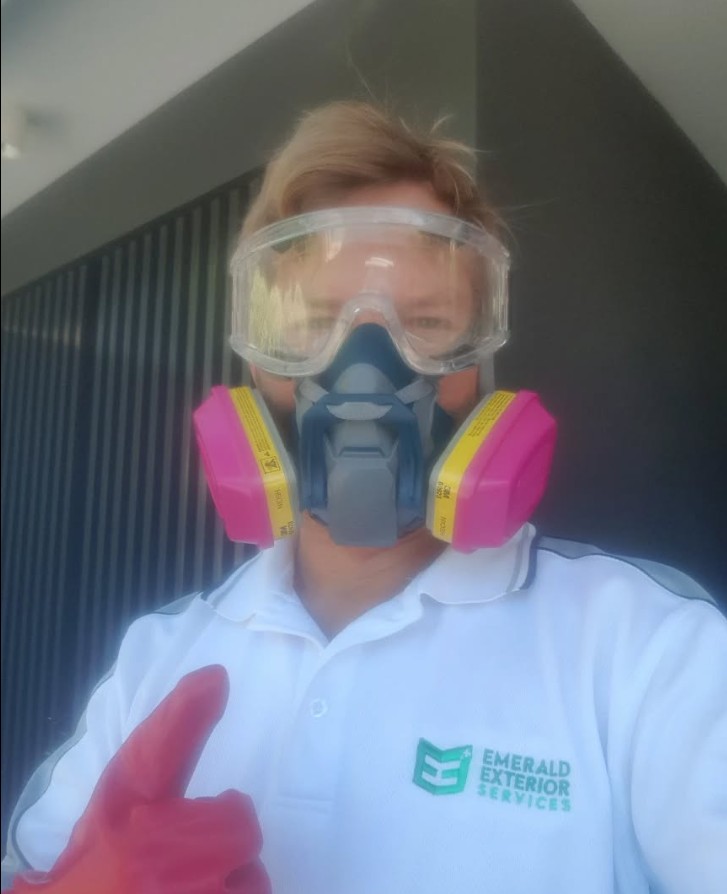
Our team holds relevant EWP, working-from-heights, White Card and OH&S qualifications, along with other high-risk qualifications relevant to the work being performed. We also carry $20 million public and product liability insurance.

Emerald is certified by Master Builders NSW and is a Central Coast Council pre-qualified supplier. These credentials support our commitment to structured, professional work for strata committees, property managers, councils and commercial clients.
Project example: Prings Road, Narara/Niagara Park
Prings Road involved approximately 50 townhouses and a six-day roof cleaning project.
The scope included:
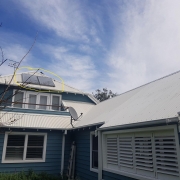
- Roof soft washing
- Gutter cleaning
- 60-foot boom lift access
- A documented works plan
- Resident and strata communication
- Ground-level traffic control
- Walkie-talkie communication with boom operators
- Moving clear-zone signage as work progressed
This was a substantial project, but the planning process helped break it into manageable daily work areas. Residents received information in advance, while the team could work through the complex in a logical sequence.


One strata client later wrote:
“100% the best crew we’ve worked with for our strata property. They did a stellar job, and communication was top notch. Will be calling them out for future jobs without hesitation.”
Project example: 8–10 Range Road
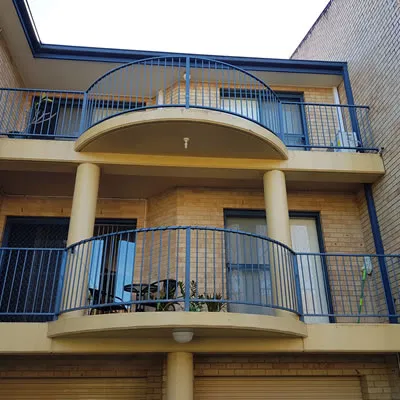
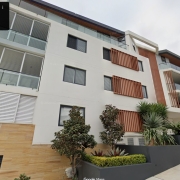
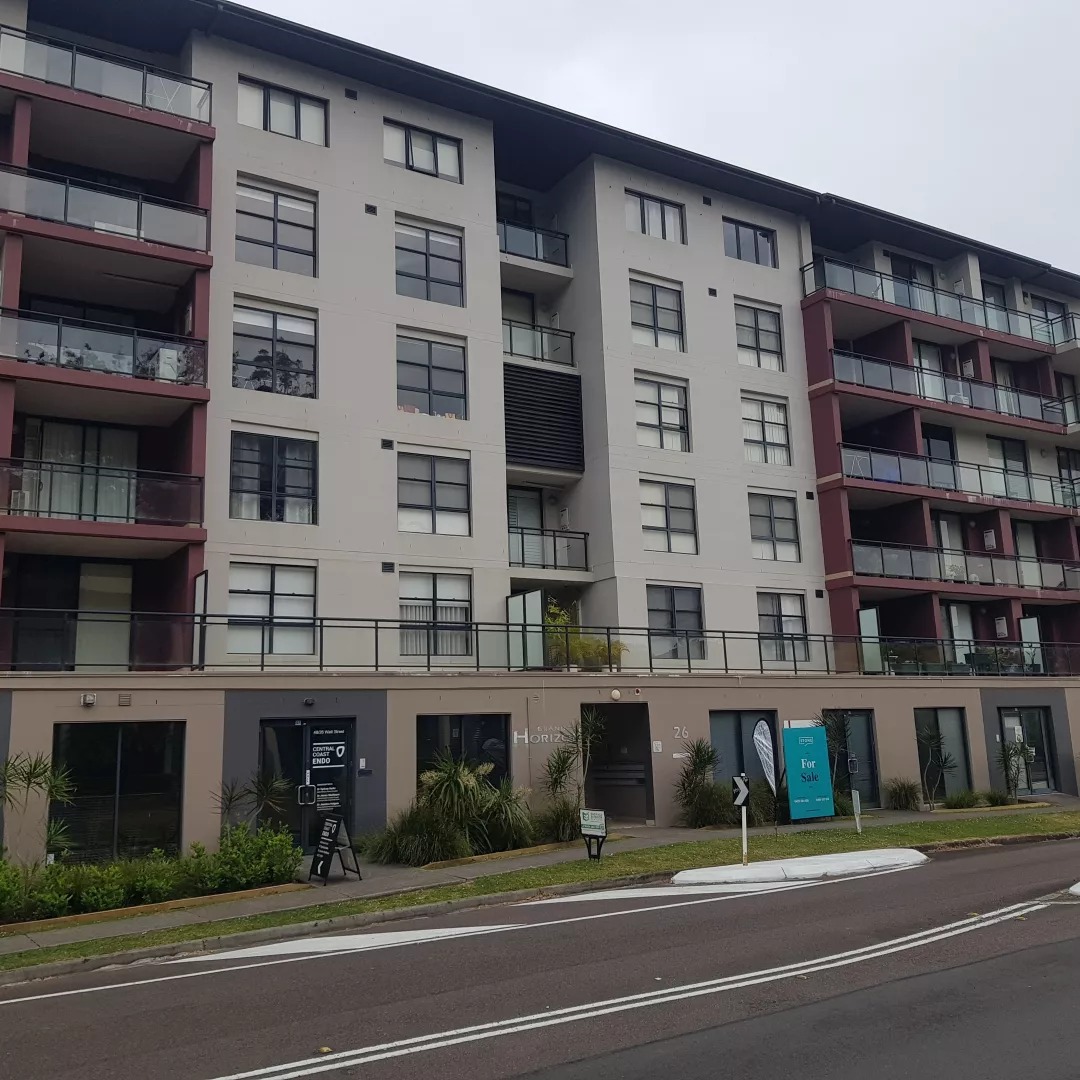
The 8–10 Range Road project involved approximately 35 apartments within a multi-level, sectioned building. Emerald completed the work over four days.
The scope included:
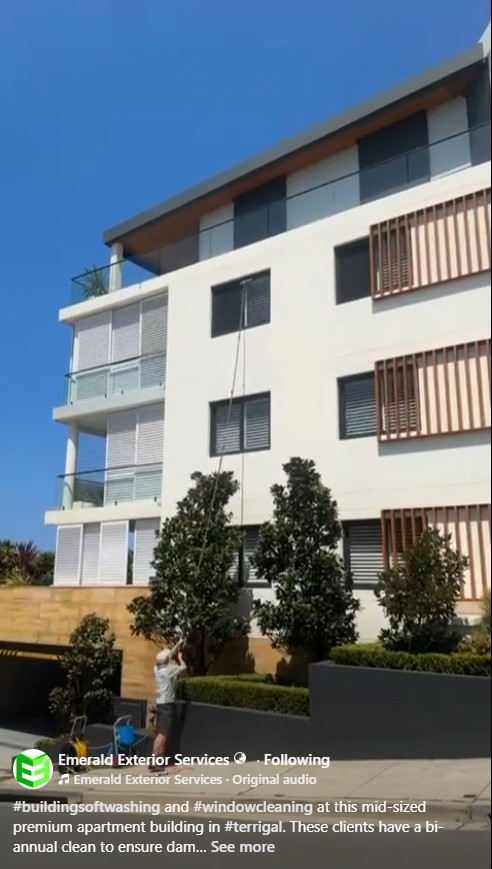
- Entire building soft washing
- Exterior window cleaning
- Driveway cleaning
- Car park cleaning
- Common-area paths
- Laundry areas
- Picnic areas
- Selected private balconies
The property presented several access challenges, including different levels, multiple access points, laddering, fences and balconies. Resident movements and safety also had to be considered throughout the project.

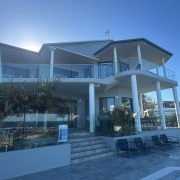
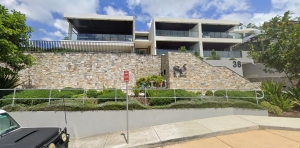
Google aerial site image showing the scale of the multi-level apartment complex at Range Road.
A documented works plan and clear signage helped the team stage the work while keeping residents informed and protecting active areas.


As one client review states:
“A+ for the complete project from start to finish. Communication was thorough along with the work. Our 17yr old building now looks young again, no need to paint. Highly recommend Joel, Robbie and team.”
Coordinated capability: Cessnock Council tender
Emerald also completed the tendered cleaning and inspection work across seven Cessnock Council buildings.
The scope involved:
- Solar panel cleaning on large systems and high roofs
- Electrical checks delivered through tender partner Solar Power Australia
This was not a full building wash. It demonstrates Emerald’s ability to coordinate specialised access, solar cleaning and partner services within a larger public-sector project.
Protecting property and the environment
Large-scale exterior cleaning must protect more than the surface being washed. Our procedures account for gardens, vehicles, windows, painted finishes, electrical areas, common property and pedestrian safety.
Emerald uses EPA-compliant methods and plans runoff and wastewater controls according to the site and scope. Gardens and sensitive areas can be pre-wet or protected, while the team manages cleaning solutions and rinse water to minimise avoidable environmental impact.
A thorough clean should leave the property refreshed, not create additional damage, mess or maintenance issues.
What happens at handover?
At the end of a multi-day project, Emerald completes a final review of the agreed areas. Handover may include:
- Removal of signage and temporary controls
- Clean-up of equipment areas and access routes
- Inspection of completed zones
- Identification of any surface defects or maintenance issues noticed
- Progress or completion photos where appropriate
- Recommendations for future roof, gutter, window or common-area maintenance
This creates a useful record for the strata committee, strata manager or property manager and helps inform future budgeting and maintenance planning.
Plan your next strata cleaning project with confidence
Large building cleaning is safest and most efficient when it is treated as a planned project rather than an improvised service visit.
With more than 13 years of local experience, the right access equipment, trained personnel, licensed supervision, comprehensive insurance and a strong history of strata work, Emerald Exterior Services can help you plan a practical solution for your property.
Whether you need strata pressure cleaning on the Central Coast, commercial pressure cleaning, soft washing, apartment building cleaning, townhouse complex cleaning or multi-storey building cleaning anywhere from Hornsby to Morriset, we can assess the site and prepare a clear project plan.
Contact Emerald Exterior Services to arrange a site assessment and discuss a safe, efficient and compliant cleaning programme for your complex.




 EmeraldExteriorServices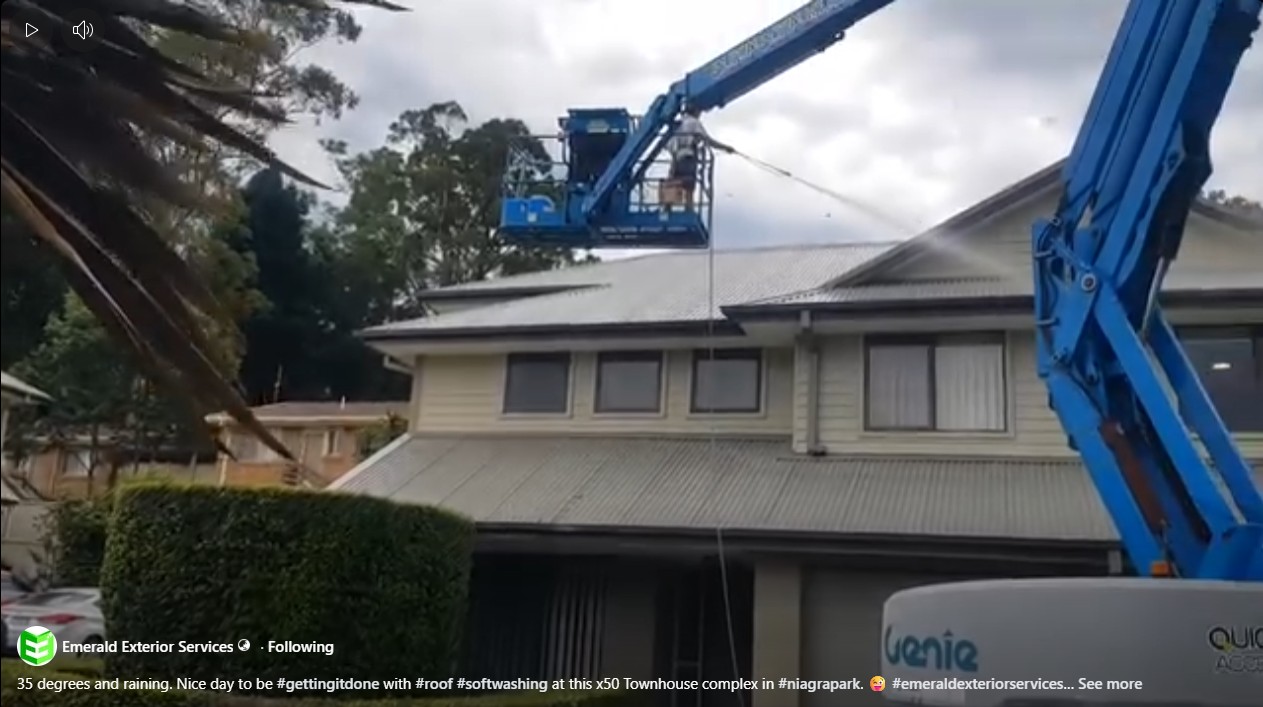


 Emerald Exterior Services
 EmeraldExteriorServices